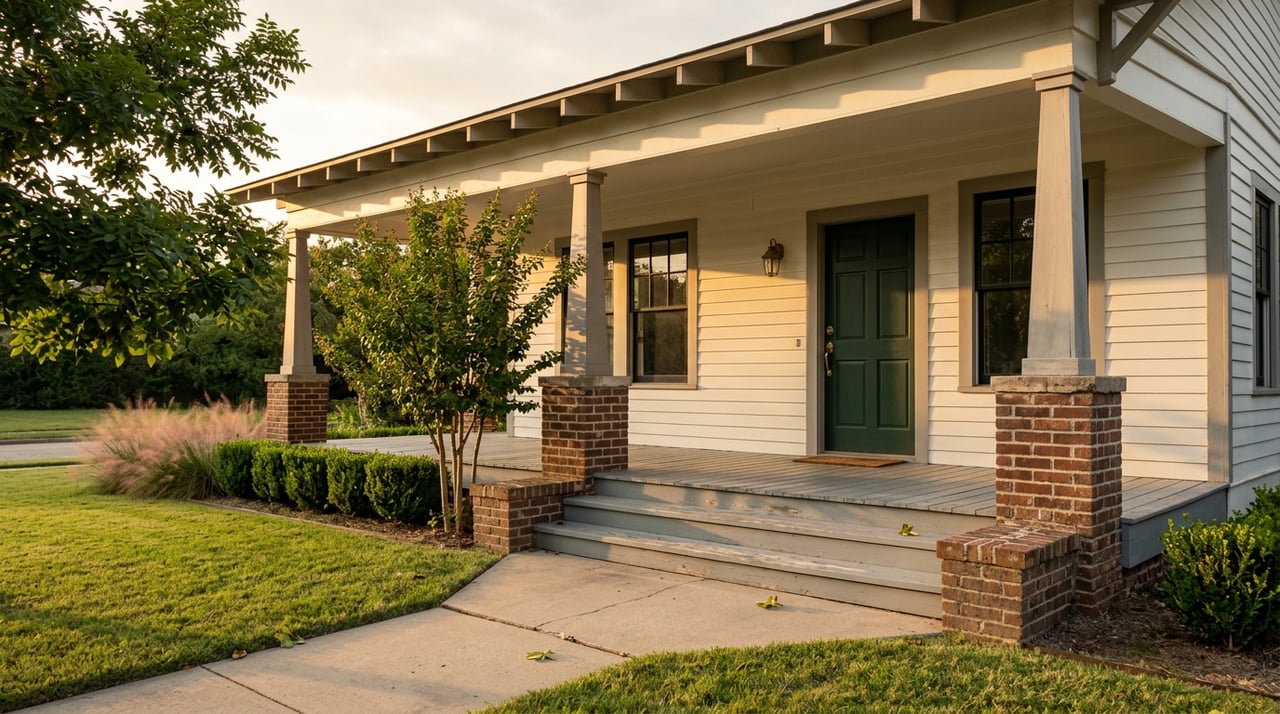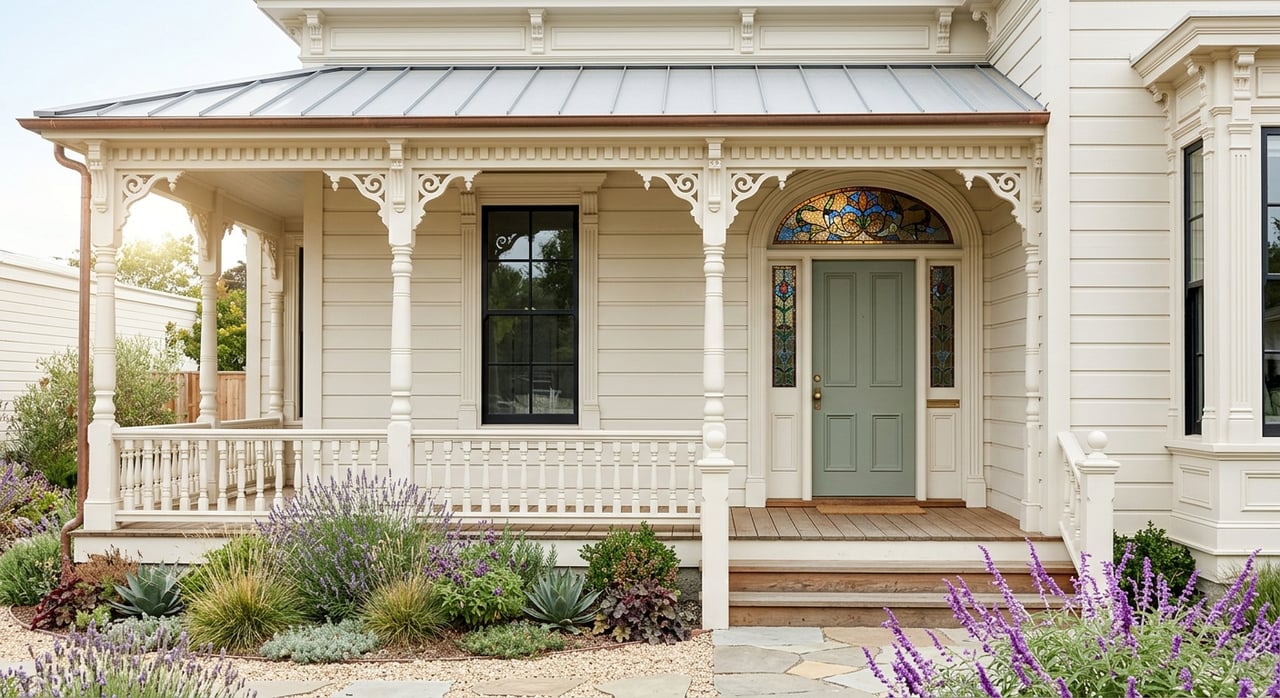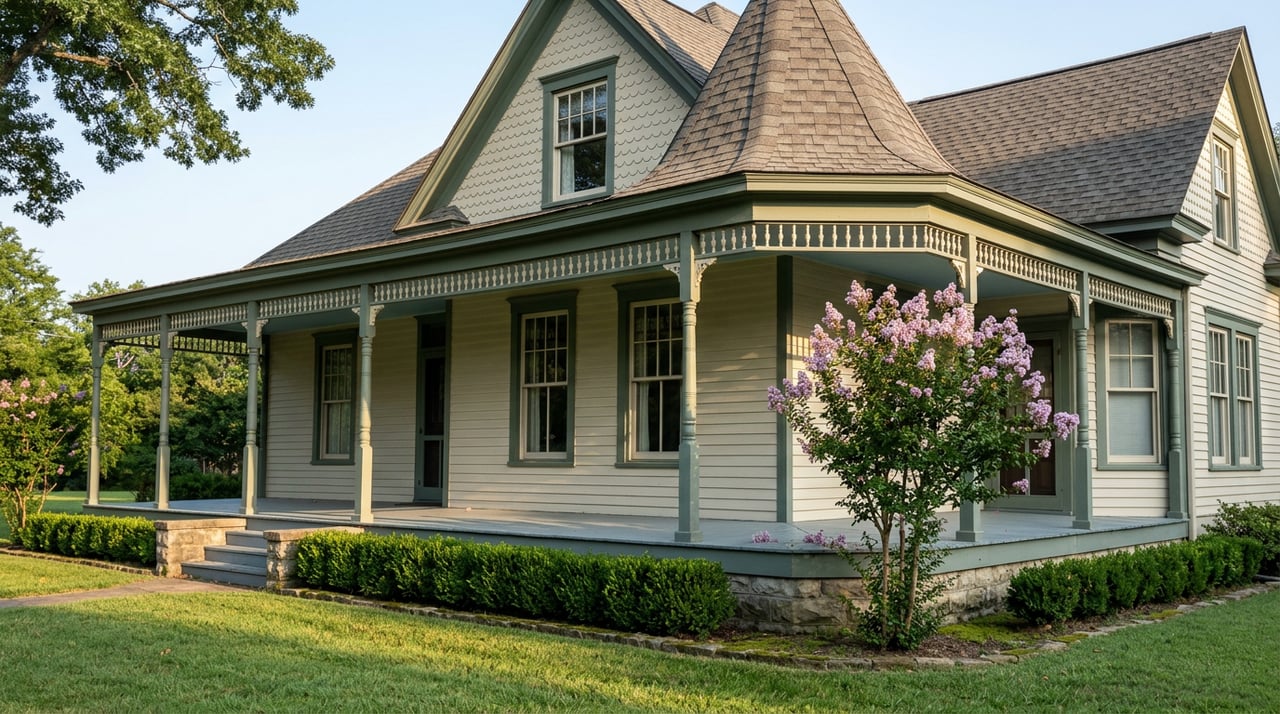
In 1901, a Queen Anne on Rio Street burned badly enough that its owner later estimated the loss at 75 percent between smoke and fire damage. The house did not come down. Instead, what followed was nearly three years of renovation, working inside the same historic-district rules that had protected the home's character in the first place, before it reopened as the Hummingbird House, a boutique hotel now tucked into downtown Red Bluff a few doors from Reiter's Bakery. The building survived. The timeline is the part buyers rarely hear about until they're the ones filling out a claim.
That's the trade nobody puts on the flyer. Red Bluff earned its nickname, the Victorian City on the River, because a city ordinance actively protects the wide, tree-shaded streets lined with century-old homes. That same protection is what a buyer is paying for when a Victorian in the historic district commands a premium over a comparable newer build across town. But 2026 is not a neutral year to own a wood-frame home that's pushing 125 years old in California, and the two forces, preservation and insurance, are colliding in ways that show up at the closing table, not on the listing sheet.
What the design review board actually controls
Red Bluff isn't guessing about which homes get extra scrutiny. In June 2000 the City Council adopted Ordinance 915, creating two zoning overlays: Historic Commercial and Historic Residential. A year later, Resolution 17-2001 gave the Planning Commission a formal set of design guidelines to enforce inside those districts. The Victorian District itself runs along Jefferson, Washington, Johnson, Lincoln, Rio, Franklin, Crittenden, and Union streets and the blocks between them.
Design review in that footprint is a separate process from a standard building permit. It evaluates architecture, materials, landscaping, and whether a change is in harmony with the surrounding block, and it can approve, conditionally approve, or deny a project on those grounds alone. That's a meaningfully different renovation timeline than a buyer moving into a subdivision on the edge of town, where a new roof or a repainted exterior doesn't trigger a second layer of review.
The Kelly-Griggs House Museum on Washington Street is the version of this system working as intended. Built in the early 1880s by Sidney Allen Griggs, sold to the Kelly family in 1931, and purchased by a nonprofit preservation association in 1965, it took four years of restoration before opening as a museum in 1969. The rules that protect it are the same rules a private homeowner two blocks over lives under today, minus the museum's volunteer labor and donated furnishings.
The insurance market moved while nobody was looking
Here's the part that changes the math for anyone weighing a Victorian against a newer home in Cottonwood or a ranchette outside Los Molinos. Effective October 15, 2026, California's Department of Insurance approved a statewide FAIR Plan rate increase of 29.1 percent, the largest the plan has approved in recent history. As of June 2026, the FAIR Plan's total exposure had reached $768 billion, an 11 percent jump since September 2025 and a 250 percent increase since September 2022. Enrollment has followed the same curve, climbing from roughly 124,000 policies statewide in 2019 to more than 663,000 by March 2026, according to the plan's own reporting.
One recent rate analysis flagged wildfire-adjacent corridors in Chico, Gridley, Oroville, and the Placer County foothills for above-average increases heading into that October renewal cycle. Red Bluff wasn't named specifically in that filing, but Tehama County sits inside the same broader Sacramento Valley wildfire risk band those towns are drawn from, which means the pricing pressure is regional, not confined to one zip code.
Age and construction type compound the exposure. A Sacramento-area appraiser who tracks insurance trends across Northern California markets has noted that coverage has grown noticeably tougher to place for older and classic homes specifically, even in areas where traditional insurance for newer construction remains available. Century-old wood framing, original wiring, and older roofing are exactly the profile carriers are pulling back from, independent of whether the home sits in a mapped fire hazard zone.
For a Victorian buyer, that can mean a different insurance conversation from the start. An HO-8 policy, a modified version of a standard HO-3 built for homes where replacement cost exceeds market value, is common for houses over 40 years old and doesn't behave like a typical quote. Buyers who skip that conversation until after they're in contract are the ones who end up asking their lender for an extension while they shop for coverage.
What this actually looks like in a transaction
| Inside the Historic Residential District | Outside the district | |
|---|---|---|
| Exterior repaint or re-roof | Requires design review in addition to any building permit | Building permit only |
| Approval body | Planning Commission, Technical Advisory Committee, staff | Standard permit counter |
| Typical insurance conversation | Age, wiring, and roof condition drive underwriting; HO-8 or FAIR Plan may enter the discussion | Standard HO-3 quote in most cases |
| What protects resale value | Design guidelines that keep the streetscape consistent | Newer materials, fewer restrictions |
Neither column is the wrong answer. The point is that a buyer comparing a Victorian on Washington Street to a 2010s build in another part of town is comparing two different sets of carrying costs, not just two different price tags.
What to check before you fall for the veranda
A few questions are worth asking before writing an offer on anything inside the historic district boundary:
- Has an insurance carrier actually quoted this specific address, not just the zip code? A quote in hand before closing avoids a scramble during escrow.
- Is the home covered by a standard policy, an HO-8, or is it already on the FAIR Plan? Each comes with a different renewal conversation and a different total cost once you add a Difference in Conditions policy to fill the FAIR Plan's coverage gaps.
- Has the roof, wiring, or plumbing been updated, and is there documentation? Underwriters ask, and so should you.
- Does the planned use of the home involve any exterior change? If so, budget time for design review before assuming a contractor can start next month.
- Is the property within the mapped Victorian District boundary, or adjacent to it? The city's Community Development Department can confirm this before it becomes a surprise mid-renovation.
None of this makes a Red Bluff Victorian a bad purchase. Homes in this district have survived fire, four-year restorations, and a century of ownership changes precisely because the rules around them are strict. That's the same reason the streetscape still looks the way it does. The premium a buyer pays reflects real, durable value. It just isn't the only number that shows up after closing.
Frequently Asked Questions
Does every older home in Red Bluff fall under design review? No. The Historic Commercial and Historic Residential districts have specific boundaries. A home built in 1910 outside those lines follows standard permitting. Confirming which side of the line a specific parcel sits on is worth a call to the city before assuming either way.
Does being in the historic district mean I'll automatically end up on the FAIR Plan? Not automatically. Traditional coverage is still available for many older homes in the region. Age, roof condition, wiring, and specific location all factor into what a carrier quotes, and getting an address-specific quote before closing is the only way to know where a given property lands.
Does design review slow down a resale, not just a renovation? Design review applies to changes to the property, not to the sale itself. Where it can matter for a seller is if repairs or updates are needed before listing and those repairs touch the exterior. Building that lead time into a listing timeline avoids surprises.
If you're weighing a Victorian in Red Bluff's historic core against a newer build elsewhere in Tehama or Shasta County, the comparison is worth doing with real numbers, not just a listing price. Monet Templeton has spent two decades pricing exactly these kinds of tradeoffs across Northern California. Book an appointment or request a home valuation to see what a specific property's real carrying costs look like before you write an offer.